So I’ll admit it. I’ve converted.
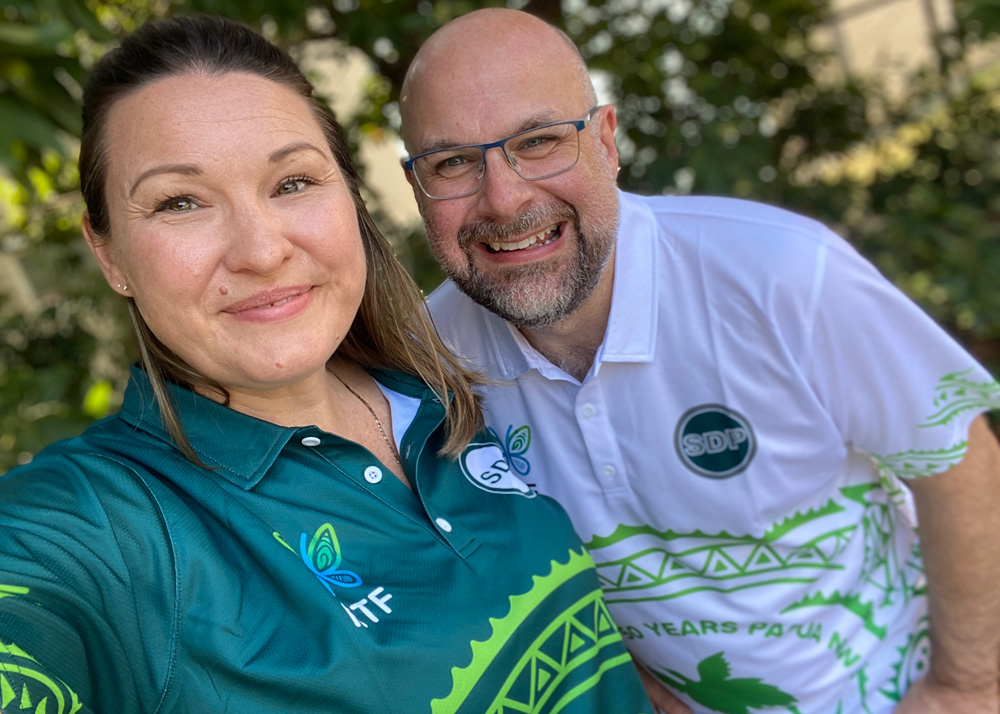
Spending all this time in Papua New Guinea has finally swayed me… I love a sublimated polo shirt.
You know the ones. Big, bold prints and the kind of material your mother looks at and says, “That won’t breathe. You’ll be too hot!”
The thing is, I’m picky.
I don’t want some cheap, scratchy polyester number that’s thicker than café fruit toast.
The better fabrics aren’t always the cheapest, but spending a few extra bucks is absolutely worth it if it means you’re not walking around in a very colourful plastic bag.
Because a sublimated shirt can look brilliant, but if nobody wants to wear it, you’ve missed the point.
That’s why fabric choice matters just as much as the design.
With sublimation, polyester is usually the starting point because the printing process works by bonding the ink into the fibres of the fabric.
But not all polyester is created equal.
Some fabrics are light, breathable and comfortable.
Others trap heat, cling to the body and make a warm day feel even warmer.
So what should you look for?
1. Choose a lighter fabric
Fabric weight is often measured in GSM, or grams per square metre.
As a general rule, a lighter fabric will feel cooler and allow more airflow than a heavy, dense polyester.
That doesn’t mean you should automatically choose the lightest option available. The shirt still needs to hold its shape, last well and suit the way it will be used.
The goal is finding the right balance between comfort and durability.
2. Look at how the fabric is knitted
Two shirts can both say “100% polyester” on the label and feel completely different.
Mesh, micro-mesh and other breathable knits allow more air to move through the garment.
That can make a huge difference for staff working outdoors, attending events or wearing uniforms all day in hot and humid conditions.
3. Consider moisture management
Moisture-wicking fabrics are designed to move sweat away from the skin so it can evaporate more easily.
In tropical climates, that matters.
A shirt might look fantastic hanging on a rack, but the real test is how it feels after someone has been wearing it for three or four hours.
If your team is spending the day outside, moving around a site or working an event, comfort needs to be part of the brief.
4. Think about where the shirt will actually be worn
The right fabric for a corporate event may not be the right fabric for someone working outdoors all day.
Before choosing a garment, think about:
- whether it will be worn indoors or outdoors
- how active the wearer will be
- how long they will wear it
- the temperature and humidity
- how often it will be washed
- whether comfort or heavy-duty durability is the bigger priority
There is no single “best” sublimation fabric.
There is a best fabric for the job.
5. Pay a bit extra for comfort
When you’re ordering hundreds of shirts, it’s tempting to focus on the cheapest unit price.
But saving a few dollars per shirt can be a false economy if the fabric is hot, scratchy or uncomfortable.
If people are going to wear the shirt regularly, spend a little extra on a fabric that feels better, breathes better and suits the climate.
The shirt might cost more upfront, but it’s far more likely to actually get worn.
And that’s the whole point.
Need help choosing the right shirt?
At Brand Hero PNG, we can help with the whole process, from selecting the right garment and fabric through to artwork, cultural design integration, production and delivery.
If you’re planning staff uniforms, event shirts or custom sublimated apparel, talk to us before you lock in the garment.
A few extra dollars spent on the right fabric can be the difference between a shirt people love wearing and 500 colourful sweat boxes.