Mine sites and industrial workplaces are high-risk environments.
There is constant movement, heavy machinery, changing conditions and a mix of workers, contractors and visitors on site. In these settings, signage is not a nice-to-have. It is critical.
Yet one of the most common issues we see across mine and industrial sites in PNG is signage that is outdated, inconsistent, damaged or unclear.
Which raises a simple but important question.
Is your mine site signage actually compliant?
Compliance is about safety, not box-ticking
Compliance often gets reduced to audits and paperwork. In reality, compliant signage exists for one reason only. To keep people safe.
Good safety signage:
- Warns people before they enter danger
- Reinforces safe behaviour
- Supports inductions and ongoing training
- Reduces reliance on verbal instructions
- Helps sites meet legal and operational obligations
When signage is missing, unclear or ignored, risk increases immediately.
What compliance means on PNG mine sites
In Papua New Guinea, mine site signage forms part of broader workplace health and safety obligations under mining legislation, site safety management systems and operator standards.
While requirements vary between operations, compliant signage generally needs to:
- Clearly identify hazards and required behaviours
- Be understandable to workers, contractors and visitors
- Align with Safety Management Plans and Hazard Registers
- Support inductions and permit systems
- Withstand harsh site conditions
Many PNG mine sites also align with international standards, particularly where audits follow Australian or global frameworks. This is where consistency and recognised symbols matter most.
The role of ISO 7010 safety symbols
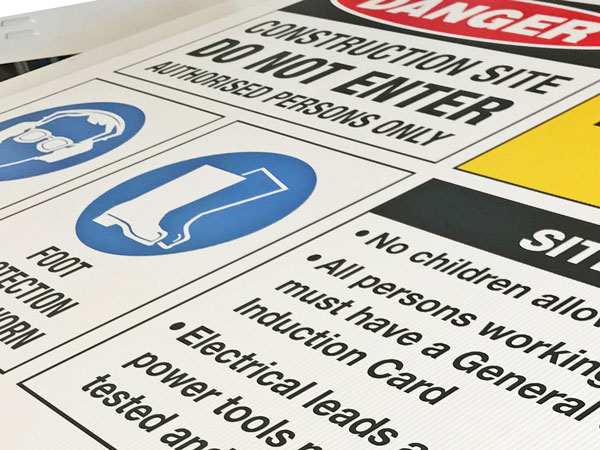
ISO 7010 is the international standard for safety sign symbols covering hazards, mandatory actions, prohibitions and emergency information.
You already recognise them:
- Mandatory PPE icons
- Warning symbols
- Prohibition symbols
- Emergency exit and first aid signage
Their strength lies in being instantly recognisable, language-independent and consistent across sites and countries.
On mine sites with diverse workforces, this consistency reduces confusion, speeds up decision-making and supports safer behaviour without relying solely on text.
What compliant signage actually needs to do
Compliance is not just about having signs on site. It is about having the right signs in the right places.
Effective mine site signage must:
- Be clear and readable at a glance
- Use recognised symbols and colour standards
- Remain visible in dust, glare and low light
- Be durable enough for harsh conditions
- Be positioned where decisions are actually made
A sign that cannot be seen or understood is not compliant in practice, no matter what the checklist says.
Common compliance issues we see
The same problems appear again and again:
- Faded or damaged signs
- Temporary signs left in place permanently
- Mixed styles and symbols across site areas
- Outdated messaging that no longer reflects current hazards
- Signs positioned too far from the actual risk
- Non-reflective signage in low visibility zones
These issues usually build up over time as sites expand or change.
Visibility and consistency matter
Mine sites are visually busy environments. If signage does not stand out, it will be missed.
That is why compliant signage relies on strong contrast, clear iconography, legible text and reflective materials where visibility is reduced.
Consistency is just as important. When signage follows the same visual language across a site, information is processed faster. When it does not, hesitation increases and confidence drops.
Temporary sites still need compliant signage
Exploration areas, shutdowns and temporary works introduce new risks. Temporary does not mean optional.
Clear, durable and compliant signage is still required, even for short-term conditions.
Signage reflects safety culture
Well-maintained, consistent signage sends a clear message that safety is taken seriously. Damaged or confusing signage sends the opposite message.
That signal matters on every site.
When to review your signage
It is time for a review if:
- Your site layout has changed
- New hazards or processes are introduced
- Signs show wear or damage
- Multiple contractors have installed signage over time
- You are preparing for an audit
A signage review is often one of the fastest ways to reduce risk.
Compliance done properly
At Brand Hero PNG, we design and produce mine site signage that meets compliance requirements and works in real PNG conditions.
From ISO-aligned safety signs and reflective hazard warnings to wayfinding and site identification, we focus on clarity, durability and consistency across entire sites.
Because on a mine site, clear signage is not optional.
It is part of keeping people safe.